
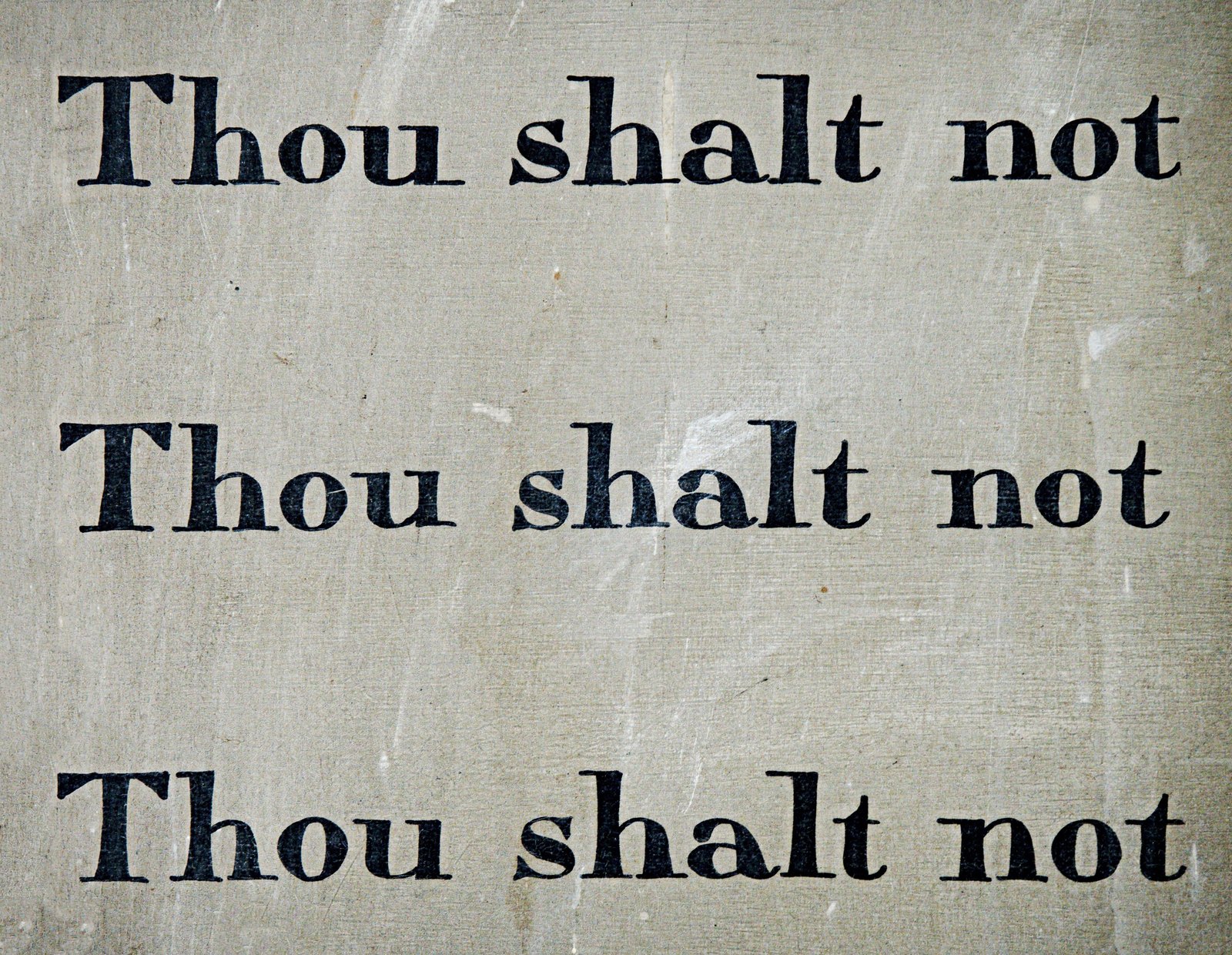
- The "shoulds" feel like moral law but they're an absorbed script you never agreed to — and they're never satisfiable.
- You can't relax while a voice is ruling it out of order; the shoulds appoint themselves the authority that never grants rest.
- Said out loud, a should takes off its costume of truth — and most don't survive being looked at directly.
You finally sit down. The day's work is done, or done enough. And instead of rest, a voice starts up. You should be doing more. You should answer that email. You shouldn't be this tired from one day. You should be able to switch off like a normal person. You should have handled that meeting better. You're on the couch, but you're not off duty, because the shoulds never clock out.
Here's the thing worth seeing: nobody handed you that rulebook, and you're allowed to question it. The shoulds feel like facts — like moral law, like the minimum price of being a decent, competent person. They're not. They're a script, and most of it you absorbed without ever agreeing to it.
Where the shoulds come from
They're assembled, not chosen. A parent who equated rest with laziness. A first boss whose approval you lived on. A culture that treats being busy as being worthy and stillness as something to apologise for. Somewhere along the way "it would be good to be productive" quietly hardened into "I am only okay if I am being productive" — and now it runs automatically, in your own voice, so it's hard to even hear it as separate from you.
And the cruelest feature: the shoulds are never satisfiable. Meet one and the next appears. Answer the email and you should start the next thing. Rest and you should have rested better, more efficiently, without the guilt. There is no amount of doing that turns the voice off, because the voice isn't actually about the doing. It's about a feeling that you're not enough as you are — and no task fixes that.
Why "just relax" bounces off
Because you can't relax while a voice is telling you that relaxing is a failure. The permission to rest has to come from somewhere, and the shoulds have appointed themselves the authority that never grants it. Telling yourself to switch off while the should-voice is running is like trying to sleep with someone reading your faults aloud. The problem isn't that you won't relax. It's that part of you is actively ruling it out of order.
What to do with the voice
You don't silence the shoulds by arguing — argue with "I should be doing more" and it just restates itself louder. What works better is getting them out, where you can see them for what they are.
A should running silently in your head wears the costume of truth. The same should written down or said plainly — "I feel like I should be working right now, and I'm exhausted" — takes the costume off. Out loud, you can finally hear the gap between I should and is that actually true, or just a rule I never agreed to? Half the shoulds don't survive being looked at directly. They only had power while they stayed unspoken, posing as facts.
That's a lot of what Mikoyi is for. At the end of a day run ragged by shoulds, say them out loud — the whole nagging list — and see them reflected back as what they are: thoughts, not laws. Not obeyed. Not fixed. Just set down, so the voice isn't the thing narrating your evening.
The honest part
Getting the shoulds out of your head genuinely helps, and it can give you back an evening the voice would've stolen. But if the should-voice is relentless and punishing — if it's less "I should do more" and more a constant sense that you're failing at being a person — that's worth talking to someone about, because that's heavier than a productivity habit and a professional can help with it. This is for the ordinary version, the evening you can't rest because a rule you never chose won't let you.
You didn't write most of those rules. You're allowed to read them back, out loud, and decide which ones you're actually keeping — and set the rest down for the night.
Questions people ask
Why do I always feel like I should be doing more?
Because the 'shoulds' are an absorbed script, not a fact. Somewhere 'it'd be good to be productive' hardened into 'I'm only okay if I'm productive,' and now it runs automatically in your own voice. It's never satisfiable — meet one should and the next appears — because it isn't really about the doing; it's a feeling of not being enough, which no task fixes.
Why can't I relax even when my work is done?
Because you can't relax while a voice is ruling it out of order. The permission to rest has to come from somewhere, and the shoulds appoint themselves the authority that never grants it. Telling yourself to switch off while that voice runs is like trying to sleep with someone reading your faults aloud.
How do I stop 'shoulding' myself?
Don't argue with the shoulds — arguing just makes them restate louder. Get them out instead. A should running silently wears the costume of truth; written down or said plainly ('I feel I should be working, and I'm exhausted'), you can hear the gap between 'I should' and 'is that actually true, or a rule I never agreed to?' Most don't survive being looked at directly.
When is the 'should' voice worth getting help for?
If it's relentless and punishing — less 'I should do more' and more a constant sense you're failing at being a person — that's heavier than a productivity habit, and a professional can help. Getting the shoulds out of your head is for the ordinary evening you can't rest because a rule you never chose won't let you.
The shoulds only have power while they stay unspoken, posing as facts. Mikoyi is five quiet minutes to get them out — say the whole nagging list, see it named back as thoughts rather than laws, and set it down. It's not therapy; it's a place to put the rulebook down so it doesn't run your evening.
Download on the App Store