
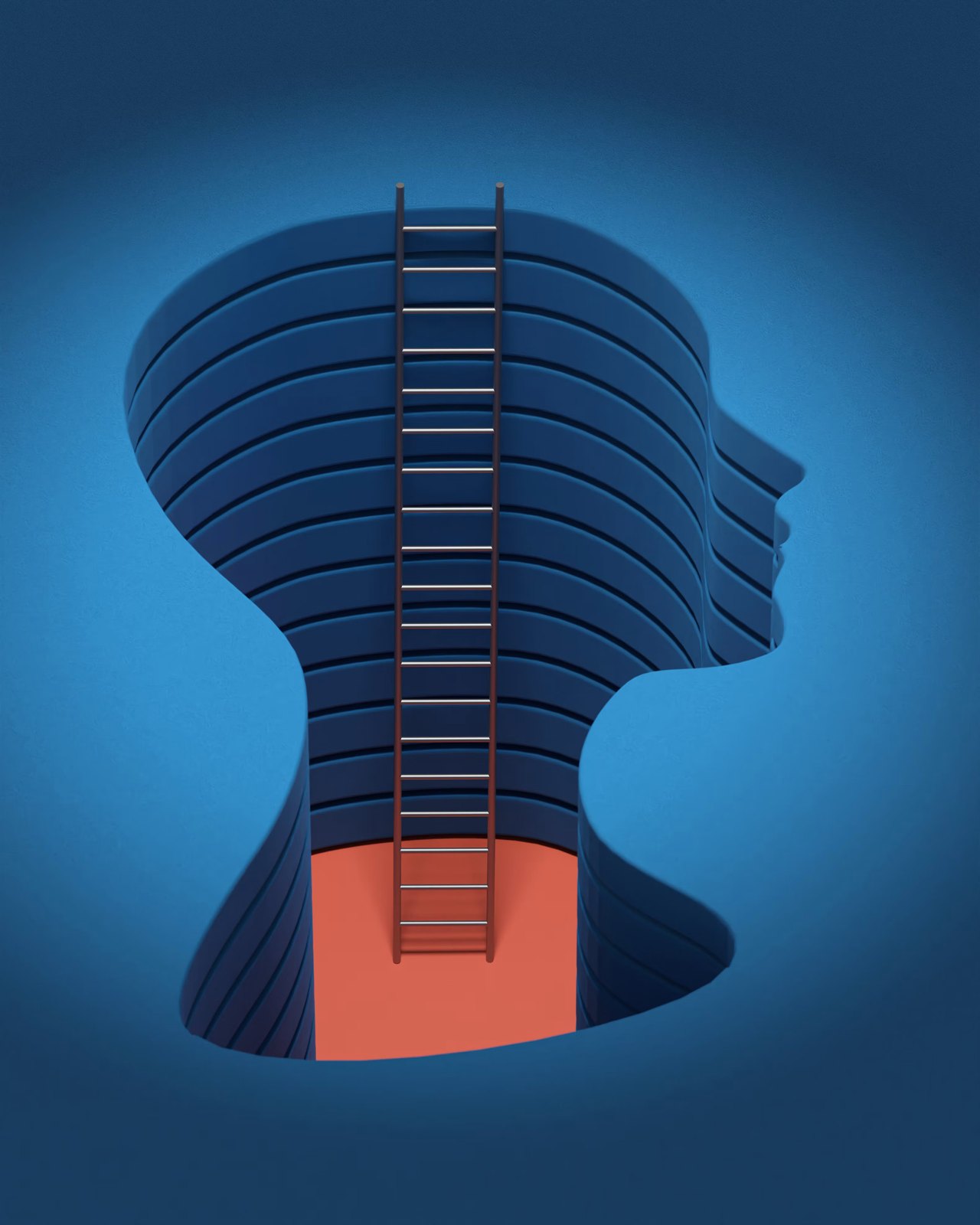
- Fast isn't the problem — unsorted is. The ideas arrive all at once, unranked, and never get the quiet second to line up.
- Saying it out loud forces the crowded room into a single line, because speech is slower than thought. That's the feature.
- You often don't know what you think until you hear yourself say it. A place to think out loud is a place to catch up to yourself.
Someone asks how you're doing and you open your mouth and — nothing. Or everything. There were ten things a second ago and now they've scattered, and the two you can still see aren't even the important ones.
It's not that you don't know what you think. It's that your thoughts move faster than you can catch them. By the time you've grabbed one, three more have gone by, and the one you grabbed already feels stale. Inside your head it's a crowded room where everyone's talking. Getting one clear sentence out feels like reaching into that room and pulling out a single person.
Fast isn't the problem. Unsorted is.
A lot of quick minds aren't short on thoughts — they're short on sorting time. The ideas are good. The connections are real. But they arrive all at once, unranked, and the brain never gets the quiet second it needs to put them in order. So you end up carrying a full head that somehow feels like a blank one, because you can't get a grip on any single piece.
This is why the day follows you around. Nothing got finished in your head — not because it's unresolved, but because it never got sorted. It's all still in the room, still talking.
Why saying it out loud changes everything
Speech is slower than thought, and that's the feature, not the bug. When you say something out loud, you can only do it one word at a time — which forces the crowded room into a single line. You hear yourself, and suddenly the thing that was a blur is a sentence. Half the time you don't know what you actually think until you hear yourself say it.
There's science under this. Putting a feeling or an experience into words measurably settles the brain's alarm response — the act of naming does something that stewing doesn't (Lieberman et al., Psychological Science, 2007). It's not that talking magics the problem away. It's that language forces order onto something that was pure speed, and order is what your fast brain was missing.
The trouble with needing a person
The usual fix is "talk to someone." And that works — until it's late, or the thing is about a person you can't talk to, or you've already used up your partner's patience for the week, or you just need to hear yourself without managing how it lands on someone else. Fast minds often need to think out loud more than there are people available to hear it.
That's the gap Mikoyi sits in. You can hold the orb and just talk — say the tangle out loud, in any order, and hear it come back to you in a straight line. No format, no managing anyone's reaction, no needing it to make sense first. You talk until the room goes quiet.
The honest part
Thinking out loud to sort a fast head is a genuinely useful thing, and it can turn a blur into something you can actually hold. It's not therapy and it's not a fix for whatever makes your brain run the way it runs. If the speed comes with real distress — if it's wrecking your sleep, your work, your relationships — a professional who understands fast minds will help more than any app can. This is for the ordinary overwhelm of a head that outruns you.
You're not scattered because something's wrong with you. You just think faster than you can file. Give the thoughts a line to stand in, and you catch up to yourself.
Questions people ask
Why can't I get my thoughts out even though my head is full?
Fast minds are often short on sorting time, not thoughts. Ideas arrive all at once, unranked, and the brain never gets the quiet second to order them — so a full head can feel like a blank one. The thoughts are there; they just haven't been put in a line yet.
Why does talking out loud help when thinking doesn't?
Speech is slower than thought and can only happen one word at a time, which forces a crowded head into a single line. Naming an experience out loud also settles the brain's alarm response. You often don't know what you think until you hear yourself say it.
What if I don't have anyone to talk to at the moment?
That's common — fast minds often need to think out loud more than there are people available. Mikoyi lets you hold the orb and just talk, saying things in any order and hearing them come back in a straight line, with no one to manage. It's a place to hear yourself.
Is this a substitute for therapy?
No. Thinking out loud to sort a fast head is useful, but it isn't therapy and won't fix what makes your brain run the way it does. If the speed comes with real distress affecting your sleep, work, or relationships, a professional who understands fast minds will help more.
Some thoughts don't quiet down until they're out of your head. Mikoyi is five quiet minutes at the end of the day — say what's turning over, see it named back, and set it down. It's not therapy, and it won't fix what's underneath — but getting it out is how the night gets quieter.
Download on the App Store